Tuesday, 1 October 2013

Use of Grid Systems by Designers

In this task, we were told to look at some designers and see how the have a grid system towards the work that they bring out in the world today.
I decided to do my researched on famous architect Zaha Hadid and typographer, Neville Brody.


 Zaha Hadid
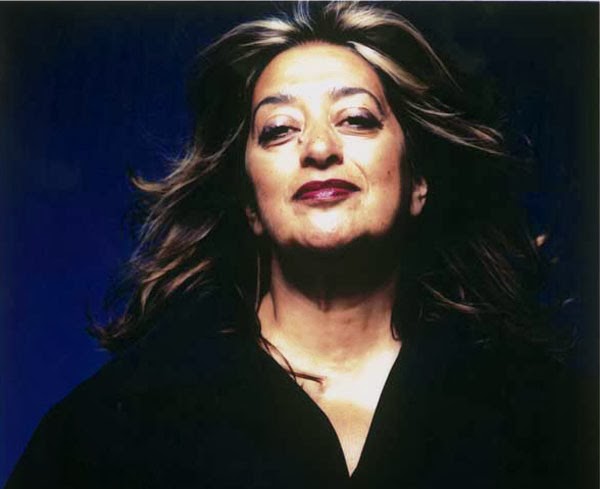


She was born in Baghdad in 1950. Mixed race having British- Iraqi Zaha Hadid is the first lady architect to win the prestigious Pritzer Prize, which she did in 2004. Her father was a lawmaker and it was expected and needed that she might further her instructive studies. 
In 1972 Hadid moved to London and enlisted at the Architectural Association School of Architecture. In 1980 she opened her own office which demonstrated a touch of a test; at the outset her thoughts were more sought after than her true outlines. Today she is overall venerated and in the cutting edge of engineering outline. She has gotten through the unattainable rank and her up to date, forefront rationalities have helped her to push the verges of construction modeling and plan.  Today her firm utilizes 350 individuals and has took care of 950 tasks in over 44 countries.

With a brief background on her, had to see what her work was like and the influences/inspiration of the work that she has done.

  • While acknowledged and considered a respected engineer, has additionally extended into the universe of inner parts. Her consistent scan for a tasteful vision incorporates all territories of outline, from the extensive outer surfaces of her structural engineering to inner parts and furniture. The inner parts are only one more enlargement of the outside.
  • Hadid was impacted by her unanticipated youth on villages of the swamps in Southern Iraq. The excellence of the scene where sand, water, structures and individuals all some way or another streamed together.

  • She works around the element of bringing excitement and to have challenges in her designs. And this is widely seen by how she manages to give out the 'wow' factor in some of her designs because of her thinking outside the box and having to give people what they need but throughout something challenging. As she says "We want them to be able to embrace the unexpected" 
  • Her designs are based on not taking what the traditional ideas or designs have nowadays but she looks at the architecture from alot of angles and is able to bring what she visualizes to real life. 


  • The belief of future is what keeps her designs up to life and a way to move forward. Something to make them stand out and in a way to be looked back as such a creative outstanding design. She uses this to create 'futuristic' designs because of the architecture world moving forward and forward, it would be a good thing to have cutting edge designs.

Workflow seen in her designs in programs


Creative interior designing of her spaces in her buildings


Hadid's designs our vision of what's to come with new spatial thoughts and strong, visionary shapes.Her designs give an impression of an alternate planet, and enthuse them, make people amped up for thoughts. Other traditional construction modeling is natural, radical, worldwide and alterable. Nowadays people are concerned with building structures that inspire unique encounters, a sort of unusual quality and originality that is equivalent to the knowledge of heading off to another nation and in that is where she, Zaha Hadid comes in with her wonderful works.

Neville Brody


Neville Brody who was born 23 April 1957 in London is an English graphic designer, typographer and an art director. He has a creative mind and his work is unique after studying a 3 year B.A course in Graphics design. Affected by his life, his work has no limits. His worked with Nike, Kenzo, British Airways etc and all his work has been brilliant. His also the designer that redesigned BBC logo as well as ‘The Times’ in England.  

His consistency workflow in his would be seen by the reasons and inspiration that he would get and place in every design by : 

  • Mostly works with typography mixing images with fonts and how he styles them up are very creative. He can create images with text which is one of his signature marks to his art. 

  • Designed a number of notable typefaces and can see that he uses different types of typefaces, futuristic, stencil, sketch fonts all to add a ‘out of this world’ effect to his work.

  • His work could be seen to have pop art in them. Mostly because back then in school, the music of pop was the in thing and this was one of the inspirations that he had towards his designs by the use of certain bold text and also the punk music back then. 

  •  One of the techniques that is seen and always would be acknowledged in Brodys' work would be use of Dadaism.  With the meaning got from the online free dictionary as "A European artistic and literary movement (1916-1923) that flouted conventional aesthetic and cultural values by producing works marked by nonsense, travesty, and incongruity". 
This Dadaism is what is consistent in Brody's work such that he can 'define' this by having using images and text to portray a meaning of something. The use of heavy geometrical designs and also abstract images combined with text gave a different element in each art. The pop art influence is seen throughout his works due to the colors that he uses in his designs. They are colorful, bright and bold. This helped define his style and he took this on by creating more of his own designs and typefaces in relation to his work and inspiration. 

Tuesday, 24 September 2013

Grid Systems

With this task, we were told to know and research more and have our own understandings of grid system and how we can use it in graphics design and how else it influences our surroundings.

What is a grid system?
A grid system from my own understanding would be the layout of a design that is placed or put In order by a formal grid, be it by rows and columns.

In a grid system, it helps the way the design and layout of any design, be it a poster, architecture drawing, building and so forth. The way the grid system is shown in some examples are here :

·         Geographical – Helps in making of maps using the longitudes and the latitudes of the map that help in in analysing data.


·         Architectural -  The grid system can help in making accurate information that the designer may need in order to execute the design, for example he can use one grid square to represent a square kilometre of a placement of  bricks.


·         Roads – Helps to keep roads in order by having separate lanes, for outgoing and incoming of cars. This represents order.


In graphics design, the grid system can be shown in certain design layouts such as posters, books, articles etc.

·         Articles – In articles, the grid system is seen by having the columns of a news paper that have been aligned next to each other. Such a layout shows organization in the certain article.
·         Books – Books have certain grid systems that are in them which are seen in paragraphing the data.  The spacing in between the words as well, show a proper layout and organization shown.
·         Posters – When making posters, there would be need to have alignment to the design such as bleeding space and so forth, so guided lines would need to be used so as to keep the design in such a format that they design is centred and aligned properly.

With a brief understanding of the grid system I gained to get knowledge from, we were told to take pictures and see where this grid system could be applied and how you could see it being used.


Invisible & Visible Grid Systems

This is where the graphical part of the grid system is applied and how we can spot where it being used.
These are normally differentiated in two parts being :

Print based grid system - this is the type that has the grid applied on its printed issue/material. e.g, articles, banners, books etc. This falls under the invisible and visible grid system because in some cases, you can see the way columns are set up in an article or book. In a banner, the centering and all cant really be seen because its covered by the text that we see on the banner, but grids used there.

Fig. 1

In Fig.1 this shows the layout that articles that you would see in magazines, books etc. This shows a grid system that will form organisation where the information will be placed.


Fig. 2

In Fig.2 we see how the grid system in Fig.1 influences what we see in these articles of nowadays and how the information in it.


Fig. 3

In Fig.3 we see a variety of the rows and columns which form a type of a mosaic type of print which could or would be a word puzzle that needs to be filled in. So this type of example shows creativity in a grid system in a design to give an illusion of something formed by using the same system.


Screen based grid system - Ina screen based type of a grid, its more or less by the term itself, 'screen based'. The grids are supposedly seen on screen be it on phones, tablets, televisions etc. The sight made by our human eye on a screen to spot a grid is falls under this. Such as mostly invisibility due to the perfection of making sure everything is on a grid before its actually seen by the people. E.G, layout of a phones icons are just seen by users as normal icons that are just placed in a position and in 'order'. But this same order is got from a grid system to have the icons sized up and placed properly. iPhone grid layout is an example of how this screen based is articulated and after the description, one can now actually see that there is a grid of rows and columns crossing each other with icons in the middle. 


Fig. 4


In the above image, we see how a grid system is used on a screen based system. The grid is represented by the icons that are placed in an order where the rows and columns criss-cross each other. This can fall under invisible grids because visually seeing the grids with our eyes is not seen as a normal grid like in Fig. 3.


Fig. 5

This a television type of grid system which we normally see but never pay attention to the details that it gives. These are normally used as background images via green screen which are seen on footages such as talk shows, news, etc. A sample of a how a grid screen via green screen is show below where the televisions are placed in a  format in relation to a grid system.


A further more task was given to us by taking pictures of objects in our surroundings that have a grid system and also not just show the typical straight line grid system but to have a variety. So with that understanding, these are the images that i had and showed where the grid system was used.

  • Foot path


This is the first picture of where i could see a simple grid system that is formed by a foot path. 


  • Foot path 2


In this path, you can see that we have a grid system that is surely not the simple straight line grid that form accurate boxes etc. The grid system on this is unique and has a pattern. With that pattern, it gives out the footpath to have a unique design as well. So playing around with a grid system platform creates unique designs.

  • Trees


This was a unique type of grid system that i saw. It had trees, paths and tables set up. The way i also took the photo gave me a different perspective of the way i saw this grid. It was seen the trees were arranged in a line from one end to another and the walking paths crossing each other with the tables being aligned in a way where the were lined up together. The 'invisible' grid i saw is shown above in the red lines. All in a perspective view.


Saturday, 21 September 2013

Culture Understanding

Coming from Africa and having so many traditions in my home country, Zambia, there is alot to learn and have in place when having the traditional morals.

Lozi, my tribe is from the western province in Zambia and is the biggest tribe in that province out of the 72 other tribes. The language is wide spread and has people from all ages managing to speak it. The term is or tribe is got from the plain land that the people of the province. Flood plain being called the Barotse flood plain where the traditional ceremony called Kuomboka is held.

The culture of the Lozi is very elderly and matured with respect from the young to the old. With any person known this tribe are shown the ways of how to greet, talk to people and certain gestures that path the way of a human being culturally and also to have good deeds towards certain people. Due to the tribe being related to a royal type of ceremony, certain ‘laws’ or rules are put in place as a guidance. The Lozi culture is strongly influenced by the flood cycle of the Zambezi river, with annual migrations taking place from the flood plain to higher ground at the start of the wet season which is called, Kuomboka. In this ceremony the Litunga moves from Lealui in the flood plain to Limulunga on higher ground. The Kuomboka usually takes place in February or March.

The Lozi culture also has the material called chitenge that is worn traditionally. It is sometimes worn as a dress both for the men and the women of the tribe and this shows the older side that the people have. Traditional food of the tribe is normally the usual millet, cassava, sorghum etc. More of the staple food due to the plain on where they originate from being a flood plain so the water there is enough to grow such staple foods. Keeping of traditional animals is also done, keeping of cows, cattles, sheep is also one way of life for the Lozi person who resides in the outer skirts of the city and more in the rural area. The herdsmen keep the cattle well and feed so in a circumstance of paying a bridal price by one, they can be received in good shape and health.

Marriage in the Lozi culture was by having girls betrothed in childhood, and married after mwalianjo (initiation); there were no boys' initiation ceremonies. Marriages were done by the payment of a small bride-price. Polygyny is common, but the Lozi do not practice polyandry. Marriages between close relatives, extending to third cousins, are prohibited; some cousin marriages occur despite this prohibition, but with the proviso that they may not be dissolved by divorce.

The religion in this culture was Christianity but because of this being a tribal situation. They were also medicine men, or traditional doctors and that would help these people around and gave them a way of belief. But it was a priority that a Lozi should know and have a close relationship with God. In the traditional world, they were traditional doctors that gave certain people abilities that they didn’t have or wanted, rainmakers were also there to give the people a belief and make sure that rain comes through when there could/would be a drought. Although the Lozi traditional ruler is not a priest, he acts on behalf of the kingdom by presenting a sacrificial animal to the grave custodian when there is a national crisis.

In a simple conclusion to this short brief culture about the Lozi tribe, it is seen that each culture has certain things that are put in place such as laws for marriage, the traditional doctors who give the people a belief in something and also the way of life and how people are taught to be loyal and also that this tribe has a way of celebrating its own culture.


Tuesday, 23 July 2013

20 Word Video

This task required us to have 20 random words which after we acquired these words, shoot a video which will have these words.

So I asked my two friends to randomly write down 10 words each which will make me have my 20 words and then have something to shoot for my video.

These are the 20 words that i had got from my friends :


  1. ZOO
  2. WATCH
  3. ANIMAL
  4. SHOE
  5. CLOTH
  6. BULL
  7. SKY
  8. NOVEL
  9. TELEVISION
  10. GEO
  11. FLOOR
  12. DEAD
  13. SUITCASE
  14. REST
  15. CUP
  16. SHAKY 
  17. SHIRT
  18. AROUND
  19. TIME
  20. DOOR
With those as the words i was told to do, i made myself a flow/rap/lyric freestyle due to me having an interest in it, i made a story to talk about me at the zoo and what happened to show creativity by any words. And this is the video that i did with it.

Click Here to watch the 'Words' Video

Thursday, 18 July 2013

Stone, Cloth, Box Story

In this task for writers for designers we were supposed to have a story done which we were going to illustrate and then shoot the video based on the story.

With that understanding, i then got my concept ready and this was going to be the story i was going to use to have my video done.

Being close buddies has the consequences of breaking friendship through petty fights or sometimes large ones and this was one that almost ended Brizzo's and Muzo's friendship. The two were inseparable but one argument left one sad and started to reflect on past activities they did together.

Muzo had flipped over Brizzo on something that escalated and left Muzo chasing Brizzo away and with a friendship like theirs, Brizzo was touched by this. Walking into his room, he entered and saw the memories box where he kept some of his stuff that him and Muzo had encountered. He approached the box and held it and there was a sad and hurt guy who just sat down and reflected on what looked like something he didnt expect.

Opening the box slowly and just the look on his face, one could easily tell, this was deeply touching. Reading a letter Muzo had sent him a long time ago made a little smile on Brizzo and then he went through some of his pocket change and came across the stone which he remembered like a dream where the two walked very happy like it was never a dull day, at the pond, bonding and throwing pebbles across the water, Brizzo then snapped back to reality and then smiled and totally realised the fight was pointless. Later touching the cloth he then remembered his birthday present which Muzo had blind folded him and just showed him what he had always wanted, such a happy face with a big smile, his emotions were pricessless. Finally laughing at Muzo's passport photo which was in the box, Brizzo was enlightened and could smile after such a bad fight. Suddenly, a knock is heard and Brizzo approaches the door. The best friend but at that moment, enemy Muzo comes in and looks equally as sad as Brizzo and then just gets to his senses and realises what happened was wrong and they did not need to fight which leads to Muzo apologising to Brizzo and the two finally making up.

The full video was directed and edited by Th33 Brizz and you can click here to watch the full video.


Sunday, 14 July 2013

Digital & Traditional Art

In this task, we were told to discuss as to how the modern art of nowadays is different from the art or designs from back then which root as the 'traditional' and how programs like Photoshop and the likes have affected designs.

From my understanding, 

Traditional Art :  is the use of media that does not require any technology, a graphics program but consists more of items such as paint, crayons, pencils, paper etc. These elements to bring out the 'rawness' of a design.

Digital Art : by the name, Digital, its easy to tell it uses software i.e Photoshop, Illustrator etc to bring out a design. This is how the days of today are being done. People can now draw on the PC without paper and even color and bring it to life without any stress just by clicking, drawing using the program tools.

But both descriptions are art. I say this because we still bring out a design, either by traditional form or digital. One will still have a piece of work that will be appreciated. Just the method which will matter as some would say the digital lacks 'creativity' or took less time to finish than traditional if given same task to do e.g a drawing of something.

Examples of these types of arts are shown below : 

Fig. 1


Fig. 2

As we can see from the above pictures, these are hand drawn images. The shades on them give them that artistic look that they have. 
In comparison with these drawings, the type of shading, lining in Fig 1 is different from Fig 2. This can shown by the quality of work that is shown, Fig 1 gives that professional look by paying attention to detail where as Fig 2 has that rough look where the artist was sketching something fast, with reoccurring lines and quick shading.

With digital art, as we know uses these programs that us programs use, Photoshop, Illustrator etc to come up with these cool graphics. Using reference with the traditional art images, i searched for similar art but in digital form to showcase how one can add even more detail by use of the program.


Fig. 1.1


Fig. 2.1

From the images above, it is easy to tell that these pictures have been given a digital enhancement. The amount of detail in Fig 1.1 with adding scenery, clouds, floating highlands, all those are digitally done to give the effect the artist is looking for. As well as giving it a 3D feel and make it look real life but in the sense of being animation. In Fig 2.1 we see more detail, color, and the realism in the image by the details in the eyes, different shades of it, the contour of shading down the lines and everything. If you look closely, it is not 100% sharp as such and could have been given a painting type of feel in the editing software.

With both traditional and digital art being compared and can see the difference in both and how designers may start off by drawing just by using normal materials like pencils and such then move on and finish the art in a program to give it more detail and feel to their design.


Friday, 12 July 2013

Online Journals

In this task, we were told to look out at the difference between a journal and an article and also state whats in each one and also read one and also make reference to one and talk about whats in one.

With that in line, comparison i made was journal articles contain original research and have been peer-reviewed which means that an anonymous person in the field has read it over and checked it for mistakes. Magazine articles don't present original research (for the first time, anyway) and have not been peer-reviewed.

We were then told to read a journal and then summarize or mention what we understood by reading all this. For that, since i have an interest in photography, video editing etc. I chose to have a look at an online journal on photography.


This the online blog where I was going to read and see what this had to offer : http://www.bjp-online.com/

Reading from this journal i got to know multiple works by people that I have never heard of and the repetition of these names showed me that they were actually famous for their works. An example was Max Pinckers, a Belgian photographer who won an award for one of his best images. This is the picture that got him the prize :


Reading the journal more also gave me more understanding of shooting techniques like portrait, landscape and the likes. It was widely spread with different tabs which were linked by multiple pages with this information.

So this blog actually is one that one can look at and see what is happening around the world because it is currently updated with new works and may help the upcoming or already established photographers out there learn a few things or two and also post their own stuff as well.