Monday, 9 December 2013

What is Culture?

CULTURE


What is culture?

Culture refers to the cumulative deposit of knowledge, experience, beliefs, values, attitudes, meanings, hierarchies, religion, notions of time, roles, spatial relations, concepts of the universe, and material objects and possessions acquired by a group of people in the course of generations through individual and group striving.

Understanding of visual communication to me is the understanding that we get by seeing things in our day to day lives. The way these visuals communicate to us in ways of images, typography, drawings, animations are all some ways we rely on the visual side of the data to get the concept from it all.

After understanding the two, we had a task to discuss a topic in which we put visual communication and the culture meaning behind our topic. With that in hand, my topic of discussion was Tattoo Culture. 

Tattoo Culture Part 2


The importance of tattoos now has different reasons with the modern of life that we are living in right now. They are currently a regular lifestyle and a quickly being noticed into social order. This was not dependably the situation. More senior eras are disillusioned with this thought as they consider tattoos with negative issues, however they are gradually needing to manage this new thought.

Tattoos are sometimes used to recall a lost adored one. These are used since the individual feels a feeling of distinction towards the individual they have lost, and an indication of appreciation. The name of the individual is regularly utilized within this sort of tattoo, yet not dependably. Certain images could be utilized within spot of the persons name that symbolize the remembrances of that individual.


FIG. 1

The image above shows what we just described as the way tattoos can be used to show appreciation of a lost one. 

Other place that people, men and women that place their tattoos is the back. With such a big place to place tattoos, they normally go for angel wings. These also have a spiritual meaning to give that angelic feel to their personality and that they can rise above anything and any hardship that comes through. But with the modern age, people pay less attention to this and go for the physical appearance whether it was a good tattoo or not. (Hendricks, 2013)


Expressions/words are additionally used to say particular phrases, typically rotating around trust and have an inspiring message to the person of the people that view it. On the other hand, regularly individuals will have these expressions composed in an alternate dialect other than English. Generally the dialect is picked since the expression has the ability to be composed in an image or look like a configuration as opposed to composed expressions.


Tattoos have been around for a long time, going once again to when tribes utilized them to symbolize enrollment. Today, tattoos speak to more than being the part of a tribe. A paramount segment of self-representation for a few, tattoos speak to diverse things and serve distinctive capacities for every single person.

Some individuals get a charge out of the wide show of tattoos on the grounds that every one recounts an alternate story or looks engaging. Whatever the motivation behind the tattoo, it is an unique stamp on the skin of that individual. 

As excellent and unique as tattoos might be for fans, they should beware of the weaknesses tattoos and their position can have. Getting a tattoo can serve an incredible reason, yet the position of the tattoo can have an expansive effect on future attempts. 

It is paramount to remember that while seeking an occupation, particularly a vocation that may require formal business clothing once a day, a prospective superintendent may view tattoos as amateurish. 

Getting a tattoo in a spot that is not difficult to conceal with dress, such as on the foot, back, hip, stomach or upper arm, will make the occupation chase simpler than if the tattoos were completely uncovered constantly. In any case, not all occupations are against tattoos. Work fields in anything with outline or symbolization will likely wouldn't fret the vicinity of tattoos. (Hendricks, 2013).


INFLUENCES ON TATTOOS

They are many influences out there that cause us to get these tattoos. And with these influences, the amount of people that are getting tattoos nowadays is much larger than before. These tattoos being constantly inked on peoples bodies are now being regarded as a ‘fine art’ which people are to stand by. Tattoo artists are now the people that also encourage to go a lot more mainstream. With club influences, what we see on the internet, peer pressure, to feel or look cool among others, the urge to feel the pain. It is such reasons people visit the ink shop and get inked. Some tattoo artists despite whatever reason a person may want to get a tattoo, they consider the body sacred hence some tattoos cannot be placed on the body because the respect they should have it. Hence putting an irrelevant tattoo on a body would be like an insult but because tattooing has become so mainstream, others look at it as an art hence whatever they want on their own bodies, they’ll find ways to get it. (Randomhistory, 2008).

·      Media – according to (Crossley, 2013) what we see on television, radio, internet, pictures etc. are also influences to us people that want tattoos. What you see, is what you get. For that some people will feel the urge to get a tattoo. Seeing major artists, role models, sportsmen in advertisements, posters etc. will give out a message of being rich, having a higher status in life where people will look up to you as well give you this successful feel of accomplishing something to be ‘up there’ with tattoos. This causes people to get a tattoo because it is the ‘in thing’ and because it will give them a status value due to it being a fashion in this modern time.

Events – people normally tend to get tattoos of events that happen in their life. This is because they are memorable and they would want to have something to always look back to and something they can at least hold on to. These event tattoos are normally got on such situations :

1. Birth of a child
2. Death of a loved one
3. Paying tribute to something/someone
4. Important day of life e.g. birthday, marriage day, winning of something
5. Passion of something can also be tatted to show what their life has an impact on.


With some of these reasons being a ‘good’ thing, there’s also the bad choice in getting a tattoo. Some of these choices tend to be realized after the peer pressure they normally had or a life happening that made them realize that it wasn’t worth it at all. Situations where tattoos are not relevant are shown below (Kelly, 2013):
  •  Lovers Name – being in love sometimes may not happen for a while to be certified that you and your partner will be in love forever. Especially if the two aren’t married to show certified proof.

  •  Favorite Vice - this is having or being attracted to something on the regular that you can’t do without it for a long time. E.g. beer tattoo, clothing line tattoo, car logo.
  • ·    No reason for it – this is the one thing that gets people get tattoos anyhow. With the response of saying ‘they just want to have a tattoo’ and when asked why, answer ‘I have no reason but just want to get it’. These are normally done with the influence of peer pressure around friends where people just want to get it because it is the in thing and will give you a status value among others.
NEGATIVE EFFECTS OF TATTOOS

Having a tattoo can be one of the biggest decisions that one can may get. Why you may ask? Well because this is ink that stays on your body for practically the rest of your life and having this permanent mark on your body has some negative effects that affects us.

In reference to an article (R-go.ca, 2013) “Society frowns upon many things today in age, one of the biggest and most common being tattoos. In a recent study, completed by myself, the average person described body art as dirty, and gross. The damage tattoos can bring to someone in today’s society can be a lot worse than one would think. Many employers will not hire someone with tattoos, when they come in for an interview, and some employers will fire their staff if they find out they have tattoos. Over half of the families in Canada would not let their children get tattoos. A lot of parents kick their kids out of the house for getting body art, which leaves them, in most cases, with nowhere to go. Some families even disown children; I have a friend from high school in which this happened to. A large number of Restaurants and stores will not allow entrance with body art showing, must have them covered up or no entry. “

It’s clear to see that some points are highlighted when getting a tattoo and what it causes us to deal with: 
• Employment difficulties
• Unrespectable towards parents
• Makes us restricted to go/enter places
• Homeless when chased
• Health issues are also forced to damage us and the tattoos.


Getting a tattoo back then was more of a stereotype thing which created less of these effects. Someone who had a tattoo was related to being in prison, evil, in a gang. Most of these relations having something to do with doing bad things. But with the new generation of today, this stereotype has stretched out with now people who are lawyers, doctors, teachers etc. all getting tattoos all to embrace this piece of ‘art’. 
People now getting tattoos’ in visible areas are now forced to restrict themselves in wearing certain clothes that are able to hide these tattoos. Especially with the working class of people today. 
Tattoos in certain areas such as the neck, face, lower arm were considered to be bad places to get tatted up because these would give then people in society a very judgemental of the person. Worse off, when going for a job interview, these tattoos are displayed. The chances of getting the job are very low than someone without because, the person with tattoos may even be charged with insubordination of having visible tattoos. (Examiner.com, 2009)


HEALTH ON TATTOOS


A tattoo is an imprint made on your skin with shades done through pricks into the skin's top layer. Normally, the tattooist utilizes a hand-held machine that like much as a sewing machine, with one or more needles puncturing the skin over and over. With each cut, the needles leaves little ink droplets. The method which if not done probably by having neutralized instruments may be a danger to our health.

Knowing the risks of these tattoos are important to know what effect they can give to our skin. Some of these allergies are shown below.

  • Hypersensitive responses. Tattoo colors — particularly red, green, yellow and blue colors — can cause hypersensitive skin responses, for example an irritated rash at the tattoo site. This can happen even years after you get the tattoo done.

  • Skin Infections - some of these tattoos may cause skin irritation like by having a rush, some may have a pus-type of infection which normally happes after having the tattoo done.

  • Blood-borne diseases - because of machine used when making this tattoo, if the instrument is not cleaned or replaced by a new one, diseases such as tetanus, hepatitis B and C have a chance of being caught by the person.

  • MRI Complications - Tattoos or changeless cosmetics may reason swelling or smoldering in the influenced zones throughout attractive thunder imaging MRI exams. In a few cases, tattoo colors can meddle with the nature of the picture. For example when an individual who has perpetual eyeliner has a MRI of the eye.


With the research that was covered in this component where we had to go in deeper and see what is it that gives this tattoo culture more than what meets the eye. Studying visual communication and understanding culture meaning gave me a widened understanding of things. The more than I did research on this subject, tattoos, i learnt things like why people get tattoos, what is the meaning behind it all, the health issues around it all etc. The is more than just sitting on that chair and getting inked up. Certain precautions have to be taken into place like religion, certain beliefs and statements that i wasnt aware of FULLY were helped by this study/module.
My skills of understanding things by visuals and having to know the meaning behind it more will help in many ways in such that you could study a culture in a particular area for example, see the people there and before you bring out something for the people in that town e.g shopping mall, You can evaluate what type of people will visit that shop and who it will be. Such things are how i understood to research more on cultures that are out there. 

The tattoo culture also looks to  be on that is growing and growing. They have become mainstream that practically anyone can now get a tattoo than before. Lawyers, police men, such examples than before where it was stereotype when someone was to get a tattoo they would be judged on certain things like religion, way of life, behaviour and so forth. The tattoos back then added value to someone but because it is becoming so mainstream in a fashionable way, this value may not be ‘special’ anymore because it is something soon to be ‘normal’ because everyone will or has it.


Monday, 14 October 2013

Trip To Little India


We as the Visual Communication students were to go on a school trip and take pictures that show the culture and the activities that happen there and say something about what we see and what goes on around there.

With that understanding, these are some of the activities that i found happening around the place called Little India.


FIG. 1

Relating to my tattoo culture that i researched on, we see people here getting temporary tattoos which fall under the henna tattoos. This is seen around the place. 


FIG. 2


FIG. 3

In the streets, I saw that the was an activity that was seen alot. This was the communication through cellular phones by the by standers and people that work there. This could be a culture such in a way that the mobile communication has now popular with even the traders now having these.


FIG. 4


FIG. 5

Shopping is seen throughout the stands that are seen in Little India. People do grocery shopping with the shops that are outside to buy fresh vegetables, food and other stuff. Street vending by the vendors that walk around with certain goods like in FIG. 4, a man selling beads to people that are in that area.

With the activities stated above, these are the most frequent that we see in the place in Little India. More to culture shared in this place have also been shown below. E.g, people having conversations, the needy that lay down for assistance/help which is normally seen in any part of the world.


FIG. 6


FIG. 7


Tuesday, 1 October 2013

Use of Grid Systems by Designers

In this task, we were told to look at some designers and see how the have a grid system towards the work that they bring out in the world today.
I decided to do my researched on famous architect Zaha Hadid and typographer, Neville Brody.


 Zaha Hadid


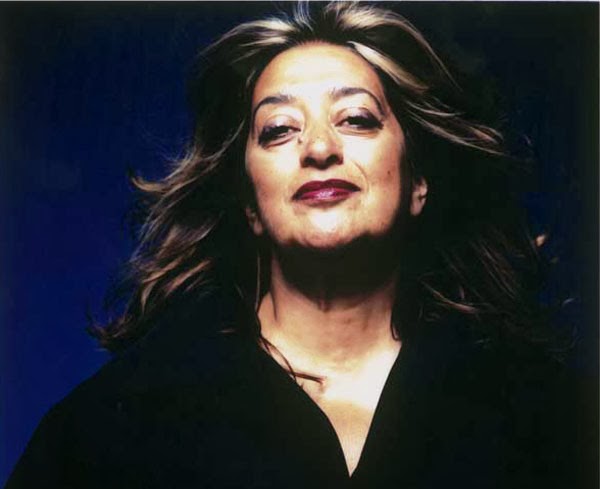
She was born in Baghdad in 1950. Mixed race having British- Iraqi Zaha Hadid is the first lady architect to win the prestigious Pritzer Prize, which she did in 2004. Her father was a lawmaker and it was expected and needed that she might further her instructive studies. 
In 1972 Hadid moved to London and enlisted at the Architectural Association School of Architecture. In 1980 she opened her own office which demonstrated a touch of a test; at the outset her thoughts were more sought after than her true outlines. Today she is overall venerated and in the cutting edge of engineering outline. She has gotten through the unattainable rank and her up to date, forefront rationalities have helped her to push the verges of construction modeling and plan.  Today her firm utilizes 350 individuals and has took care of 950 tasks in over 44 countries.

With a brief background on her, had to see what her work was like and the influences/inspiration of the work that she has done.

  • While acknowledged and considered a respected engineer, has additionally extended into the universe of inner parts. Her consistent scan for a tasteful vision incorporates all territories of outline, from the extensive outer surfaces of her structural engineering to inner parts and furniture. The inner parts are only one more enlargement of the outside.
  • Hadid was impacted by her unanticipated youth on villages of the swamps in Southern Iraq. The excellence of the scene where sand, water, structures and individuals all some way or another streamed together.

  • She works around the element of bringing excitement and to have challenges in her designs. And this is widely seen by how she manages to give out the 'wow' factor in some of her designs because of her thinking outside the box and having to give people what they need but throughout something challenging. As she says "We want them to be able to embrace the unexpected" 
  • Her designs are based on not taking what the traditional ideas or designs have nowadays but she looks at the architecture from alot of angles and is able to bring what she visualizes to real life. 


  • The belief of future is what keeps her designs up to life and a way to move forward. Something to make them stand out and in a way to be looked back as such a creative outstanding design. She uses this to create 'futuristic' designs because of the architecture world moving forward and forward, it would be a good thing to have cutting edge designs.

Workflow seen in her designs in programs


Creative interior designing of her spaces in her buildings


Hadid's designs our vision of what's to come with new spatial thoughts and strong, visionary shapes.Her designs give an impression of an alternate planet, and enthuse them, make people amped up for thoughts. Other traditional construction modeling is natural, radical, worldwide and alterable. Nowadays people are concerned with building structures that inspire unique encounters, a sort of unusual quality and originality that is equivalent to the knowledge of heading off to another nation and in that is where she, Zaha Hadid comes in with her wonderful works.

Neville Brody


Neville Brody who was born 23 April 1957 in London is an English graphic designer, typographer and an art director. He has a creative mind and his work is unique after studying a 3 year B.A course in Graphics design. Affected by his life, his work has no limits. His worked with Nike, Kenzo, British Airways etc and all his work has been brilliant. His also the designer that redesigned BBC logo as well as ‘The Times’ in England.  

His consistency workflow in his would be seen by the reasons and inspiration that he would get and place in every design by : 

  • Mostly works with typography mixing images with fonts and how he styles them up are very creative. He can create images with text which is one of his signature marks to his art. 

  • Designed a number of notable typefaces and can see that he uses different types of typefaces, futuristic, stencil, sketch fonts all to add a ‘out of this world’ effect to his work.

  • His work could be seen to have pop art in them. Mostly because back then in school, the music of pop was the in thing and this was one of the inspirations that he had towards his designs by the use of certain bold text and also the punk music back then. 

  •  One of the techniques that is seen and always would be acknowledged in Brodys' work would be use of Dadaism.  With the meaning got from the online free dictionary as "A European artistic and literary movement (1916-1923) that flouted conventional aesthetic and cultural values by producing works marked by nonsense, travesty, and incongruity". 
This Dadaism is what is consistent in Brody's work such that he can 'define' this by having using images and text to portray a meaning of something. The use of heavy geometrical designs and also abstract images combined with text gave a different element in each art. The pop art influence is seen throughout his works due to the colors that he uses in his designs. They are colorful, bright and bold. This helped define his style and he took this on by creating more of his own designs and typefaces in relation to his work and inspiration. 

Tuesday, 24 September 2013

Grid Systems

With this task, we were told to know and research more and have our own understandings of grid system and how we can use it in graphics design and how else it influences our surroundings.

What is a grid system?
A grid system from my own understanding would be the layout of a design that is placed or put In order by a formal grid, be it by rows and columns.

In a grid system, it helps the way the design and layout of any design, be it a poster, architecture drawing, building and so forth. The way the grid system is shown in some examples are here :

·         Geographical – Helps in making of maps using the longitudes and the latitudes of the map that help in in analysing data.


·         Architectural -  The grid system can help in making accurate information that the designer may need in order to execute the design, for example he can use one grid square to represent a square kilometre of a placement of  bricks.


·         Roads – Helps to keep roads in order by having separate lanes, for outgoing and incoming of cars. This represents order.


In graphics design, the grid system can be shown in certain design layouts such as posters, books, articles etc.

·         Articles – In articles, the grid system is seen by having the columns of a news paper that have been aligned next to each other. Such a layout shows organization in the certain article.
·         Books – Books have certain grid systems that are in them which are seen in paragraphing the data.  The spacing in between the words as well, show a proper layout and organization shown.
·         Posters – When making posters, there would be need to have alignment to the design such as bleeding space and so forth, so guided lines would need to be used so as to keep the design in such a format that they design is centred and aligned properly.

With a brief understanding of the grid system I gained to get knowledge from, we were told to take pictures and see where this grid system could be applied and how you could see it being used.


Invisible & Visible Grid Systems

This is where the graphical part of the grid system is applied and how we can spot where it being used.
These are normally differentiated in two parts being :

Print based grid system - this is the type that has the grid applied on its printed issue/material. e.g, articles, banners, books etc. This falls under the invisible and visible grid system because in some cases, you can see the way columns are set up in an article or book. In a banner, the centering and all cant really be seen because its covered by the text that we see on the banner, but grids used there.

Fig. 1

In Fig.1 this shows the layout that articles that you would see in magazines, books etc. This shows a grid system that will form organisation where the information will be placed.


Fig. 2

In Fig.2 we see how the grid system in Fig.1 influences what we see in these articles of nowadays and how the information in it.


Fig. 3

In Fig.3 we see a variety of the rows and columns which form a type of a mosaic type of print which could or would be a word puzzle that needs to be filled in. So this type of example shows creativity in a grid system in a design to give an illusion of something formed by using the same system.


Screen based grid system - Ina screen based type of a grid, its more or less by the term itself, 'screen based'. The grids are supposedly seen on screen be it on phones, tablets, televisions etc. The sight made by our human eye on a screen to spot a grid is falls under this. Such as mostly invisibility due to the perfection of making sure everything is on a grid before its actually seen by the people. E.G, layout of a phones icons are just seen by users as normal icons that are just placed in a position and in 'order'. But this same order is got from a grid system to have the icons sized up and placed properly. iPhone grid layout is an example of how this screen based is articulated and after the description, one can now actually see that there is a grid of rows and columns crossing each other with icons in the middle. 


Fig. 4


In the above image, we see how a grid system is used on a screen based system. The grid is represented by the icons that are placed in an order where the rows and columns criss-cross each other. This can fall under invisible grids because visually seeing the grids with our eyes is not seen as a normal grid like in Fig. 3.


Fig. 5

This a television type of grid system which we normally see but never pay attention to the details that it gives. These are normally used as background images via green screen which are seen on footages such as talk shows, news, etc. A sample of a how a grid screen via green screen is show below where the televisions are placed in a  format in relation to a grid system.


A further more task was given to us by taking pictures of objects in our surroundings that have a grid system and also not just show the typical straight line grid system but to have a variety. So with that understanding, these are the images that i had and showed where the grid system was used.

  • Foot path


This is the first picture of where i could see a simple grid system that is formed by a foot path. 


  • Foot path 2


In this path, you can see that we have a grid system that is surely not the simple straight line grid that form accurate boxes etc. The grid system on this is unique and has a pattern. With that pattern, it gives out the footpath to have a unique design as well. So playing around with a grid system platform creates unique designs.

  • Trees


This was a unique type of grid system that i saw. It had trees, paths and tables set up. The way i also took the photo gave me a different perspective of the way i saw this grid. It was seen the trees were arranged in a line from one end to another and the walking paths crossing each other with the tables being aligned in a way where the were lined up together. The 'invisible' grid i saw is shown above in the red lines. All in a perspective view.


Saturday, 21 September 2013

Culture Understanding

Coming from Africa and having so many traditions in my home country, Zambia, there is alot to learn and have in place when having the traditional morals.

Lozi, my tribe is from the western province in Zambia and is the biggest tribe in that province out of the 72 other tribes. The language is wide spread and has people from all ages managing to speak it. The term is or tribe is got from the plain land that the people of the province. Flood plain being called the Barotse flood plain where the traditional ceremony called Kuomboka is held.

The culture of the Lozi is very elderly and matured with respect from the young to the old. With any person known this tribe are shown the ways of how to greet, talk to people and certain gestures that path the way of a human being culturally and also to have good deeds towards certain people. Due to the tribe being related to a royal type of ceremony, certain ‘laws’ or rules are put in place as a guidance. The Lozi culture is strongly influenced by the flood cycle of the Zambezi river, with annual migrations taking place from the flood plain to higher ground at the start of the wet season which is called, Kuomboka. In this ceremony the Litunga moves from Lealui in the flood plain to Limulunga on higher ground. The Kuomboka usually takes place in February or March.

The Lozi culture also has the material called chitenge that is worn traditionally. It is sometimes worn as a dress both for the men and the women of the tribe and this shows the older side that the people have. Traditional food of the tribe is normally the usual millet, cassava, sorghum etc. More of the staple food due to the plain on where they originate from being a flood plain so the water there is enough to grow such staple foods. Keeping of traditional animals is also done, keeping of cows, cattles, sheep is also one way of life for the Lozi person who resides in the outer skirts of the city and more in the rural area. The herdsmen keep the cattle well and feed so in a circumstance of paying a bridal price by one, they can be received in good shape and health.

Marriage in the Lozi culture was by having girls betrothed in childhood, and married after mwalianjo (initiation); there were no boys' initiation ceremonies. Marriages were done by the payment of a small bride-price. Polygyny is common, but the Lozi do not practice polyandry. Marriages between close relatives, extending to third cousins, are prohibited; some cousin marriages occur despite this prohibition, but with the proviso that they may not be dissolved by divorce.

The religion in this culture was Christianity but because of this being a tribal situation. They were also medicine men, or traditional doctors and that would help these people around and gave them a way of belief. But it was a priority that a Lozi should know and have a close relationship with God. In the traditional world, they were traditional doctors that gave certain people abilities that they didn’t have or wanted, rainmakers were also there to give the people a belief and make sure that rain comes through when there could/would be a drought. Although the Lozi traditional ruler is not a priest, he acts on behalf of the kingdom by presenting a sacrificial animal to the grave custodian when there is a national crisis.

In a simple conclusion to this short brief culture about the Lozi tribe, it is seen that each culture has certain things that are put in place such as laws for marriage, the traditional doctors who give the people a belief in something and also the way of life and how people are taught to be loyal and also that this tribe has a way of celebrating its own culture.


Tuesday, 23 July 2013

20 Word Video

This task required us to have 20 random words which after we acquired these words, shoot a video which will have these words.

So I asked my two friends to randomly write down 10 words each which will make me have my 20 words and then have something to shoot for my video.

These are the 20 words that i had got from my friends :


  1. ZOO
  2. WATCH
  3. ANIMAL
  4. SHOE
  5. CLOTH
  6. BULL
  7. SKY
  8. NOVEL
  9. TELEVISION
  10. GEO
  11. FLOOR
  12. DEAD
  13. SUITCASE
  14. REST
  15. CUP
  16. SHAKY 
  17. SHIRT
  18. AROUND
  19. TIME
  20. DOOR
With those as the words i was told to do, i made myself a flow/rap/lyric freestyle due to me having an interest in it, i made a story to talk about me at the zoo and what happened to show creativity by any words. And this is the video that i did with it.

Click Here to watch the 'Words' Video